One Line Coaching Offer That Attracts Clients
Most coaches do not lose clients because they are bad at coaching.
They lose them because people cannot explain what they actually do.
A visitor lands on your LinkedIn profile.
They check your website.
They read your headline.
And after a few seconds, they still do not know:
- Who you help
- What problem you solve
- What result you help create
- Why your work is different
- Whether they should take the next step
That is where many coaching businesses quietly lose good prospects.
Not because the offer is weak.
Because the offer is unclear.
Why Your One-Line Offer Matters
Your one-line offer is the sentence people use to understand you.
It is not just copywriting.
It is positioning.
If someone cannot repeat your offer in simple words, they probably will not remember it.
And if they cannot remember it, they will not refer it.
That matters for coaches because most buying decisions are built on trust.
People are not buying a small product.
They are considering a relationship.
They want to know whether you understand their problem before they give you their time, money, and personal story.
A clear offer gives them that first signal.
The Problem With Most Coaching Offers
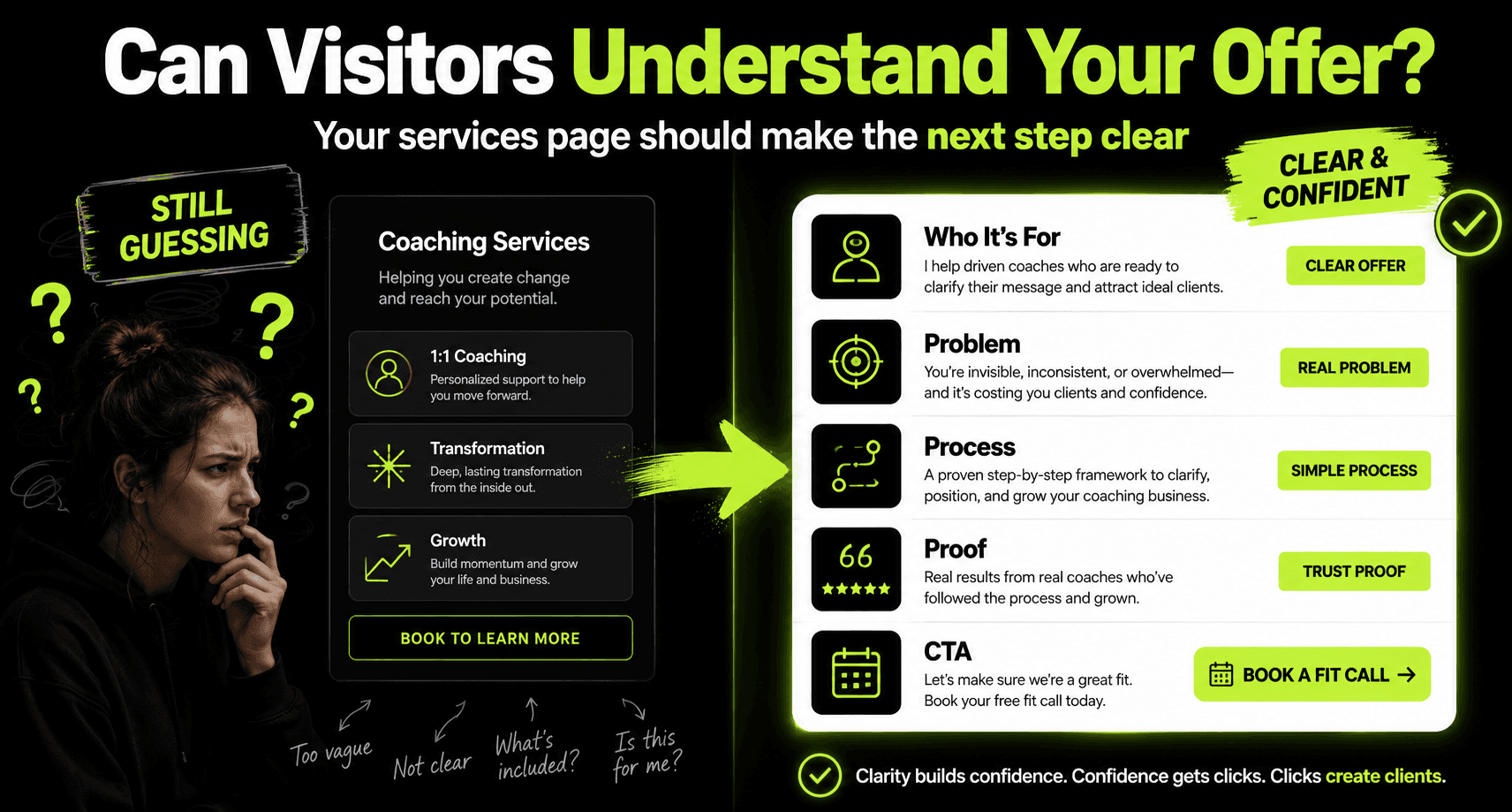
A lot of coaching offers sound warm but vague.
You have probably seen lines like:
- I help people unlock their potential.
- I help you become your best self.
- I empower people to create transformation.
- I guide clients toward growth and fulfilment.
None of these are wrong.
But they are too easy to ignore.
They sound like coaching.
They do not sound like a specific solution for a specific person.
That is the issue.
Your ideal client is not walking around thinking, “I need transformation.”
They are thinking something much more specific.
“I cannot stay consistent.”
“I am exhausted but still underperforming.”
“I keep avoiding hard decisions.”
“My business is growing, but I feel like I am falling apart.”
“I know what to do, but I cannot get myself to do it.”
Your offer should meet them there.
A Good Coaching Offer Has Three Parts
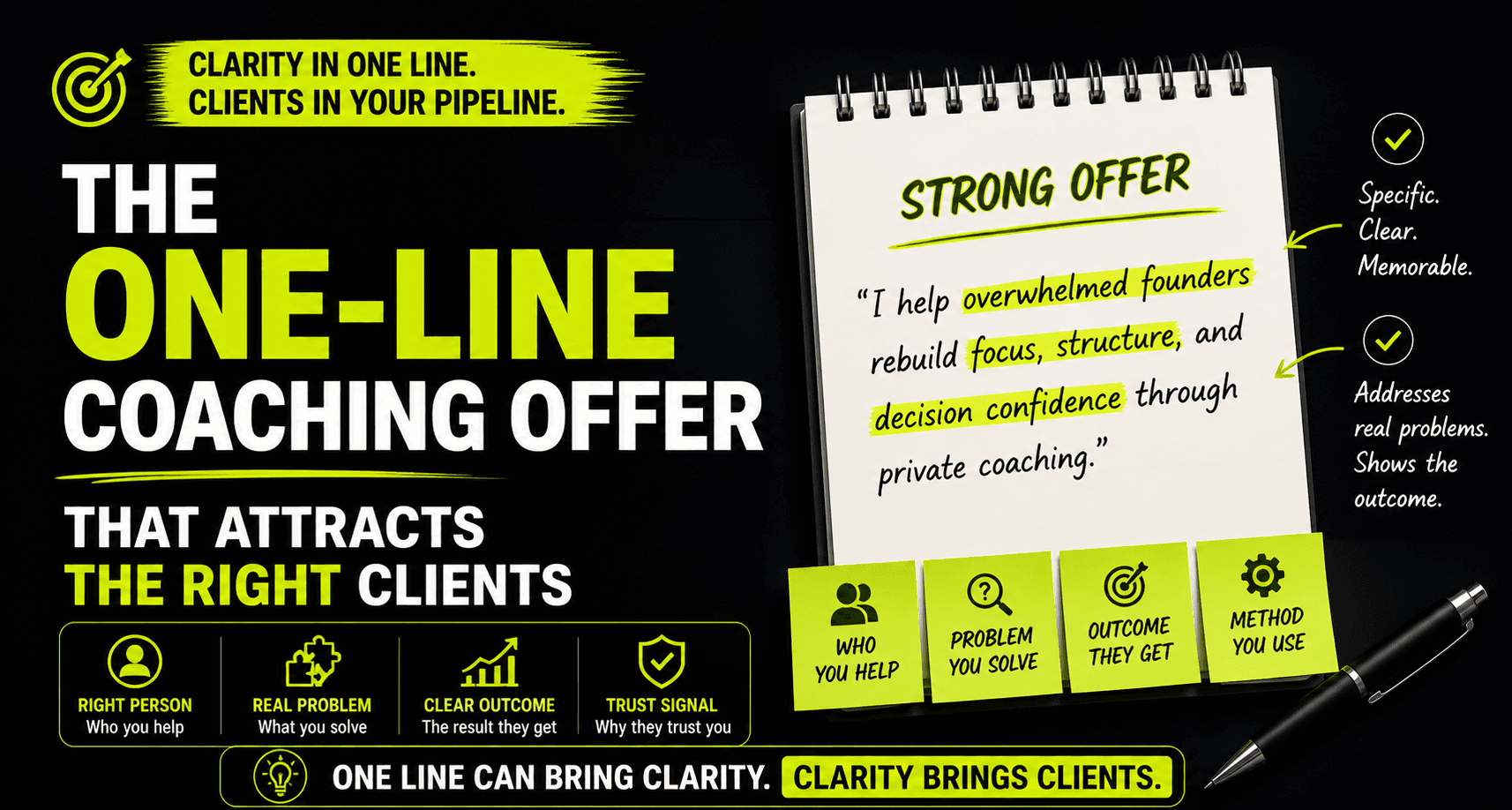
A strong one-line coaching offer usually answers three things.
- Who you help
- What problem or outcome you focus on
- How you help them move forward
Here is the simple structure:
I help [specific audience] achieve [specific outcome] through [specific method].
This is not the only formula.
But it is a useful starting point.
It forces clarity.
It removes vague language.
It makes the offer easier to understand.
Weak Offer vs Clear Offer
Here is the difference.
Weak: I help people unlock their potential.
Clearer: I help overwhelmed founders rebuild focus, structure, and decision confidence through private coaching.
The second version works better because it tells us more.
We know who it is for.
We know the problem.
We know the direction.
We know the format.
It does not try to impress everyone.
It tries to speak to the right person.
Your Offer Should Not Sound Like Everyone Else
The fastest way to weaken your coaching website is to sound too broad.
If your offer could appear on 500 other coaching websites, it is probably not specific enough.
A vague offer makes the visitor work too hard.
They have to guess:
- Is this for me?
- Is this for my problem?
- Is this coach experienced with my situation?
- What would actually happen if I booked a call?
Most people will not guess for long.
They will leave.
That is why your one-line offer should be clear enough that a stranger can understand it in seconds.
Use Client Language, Not Coaching Language
This is where many coaches miss it.
They describe the work from their side.
The client describes the problem from their side.
Those are not always the same thing.
You may say:
“I help clients reconnect with their authentic self.”
Your client may say:
“I feel disconnected from my own life.”
You may say:
“I support leadership transformation.”
Your client may say:
“I do not know how to lead this team without burning out.”
Use the language your client already has in their head.
That is what makes your offer feel real.
Examples of Stronger One-Line Coaching Offers
Here are a few examples you can adapt.
For executive coaches:
I help senior leaders make clearer decisions, communicate with more confidence, and lead without carrying everything alone.
For health coaches:
I help busy professionals rebuild energy, consistency, and healthier routines without extreme diets or unrealistic plans.
For life coaches:
I help people who feel stuck rebuild clarity, direction, and daily structure so they can move forward with confidence.
For business coaches:
I help service-based founders simplify their offer, improve their sales process, and build a business that is easier to run.
For mindset coaches:
I help high-achievers stop overthinking, trust their decisions, and take consistent action without spiralling into self-doubt.
These are not perfect final offers.
But they are much easier to understand than “I help people transform.”
Where to Use Your One-Line Offer
Your offer should not live in one place only.
Use it everywhere your prospect may be deciding whether to trust you.
- Your website hero section
- Your LinkedIn headline
- Your LinkedIn About section
- Your services page
- Your discovery call page
- Your email signature
- Your lead magnet landing page
- Your short bio
This creates consistency.
And consistency builds trust.
If your LinkedIn says one thing, your website says another, and your services page says something else, the buyer feels the gap.
They may not explain it clearly.
But they feel uncertainty.
Your one-line offer keeps the message tight.
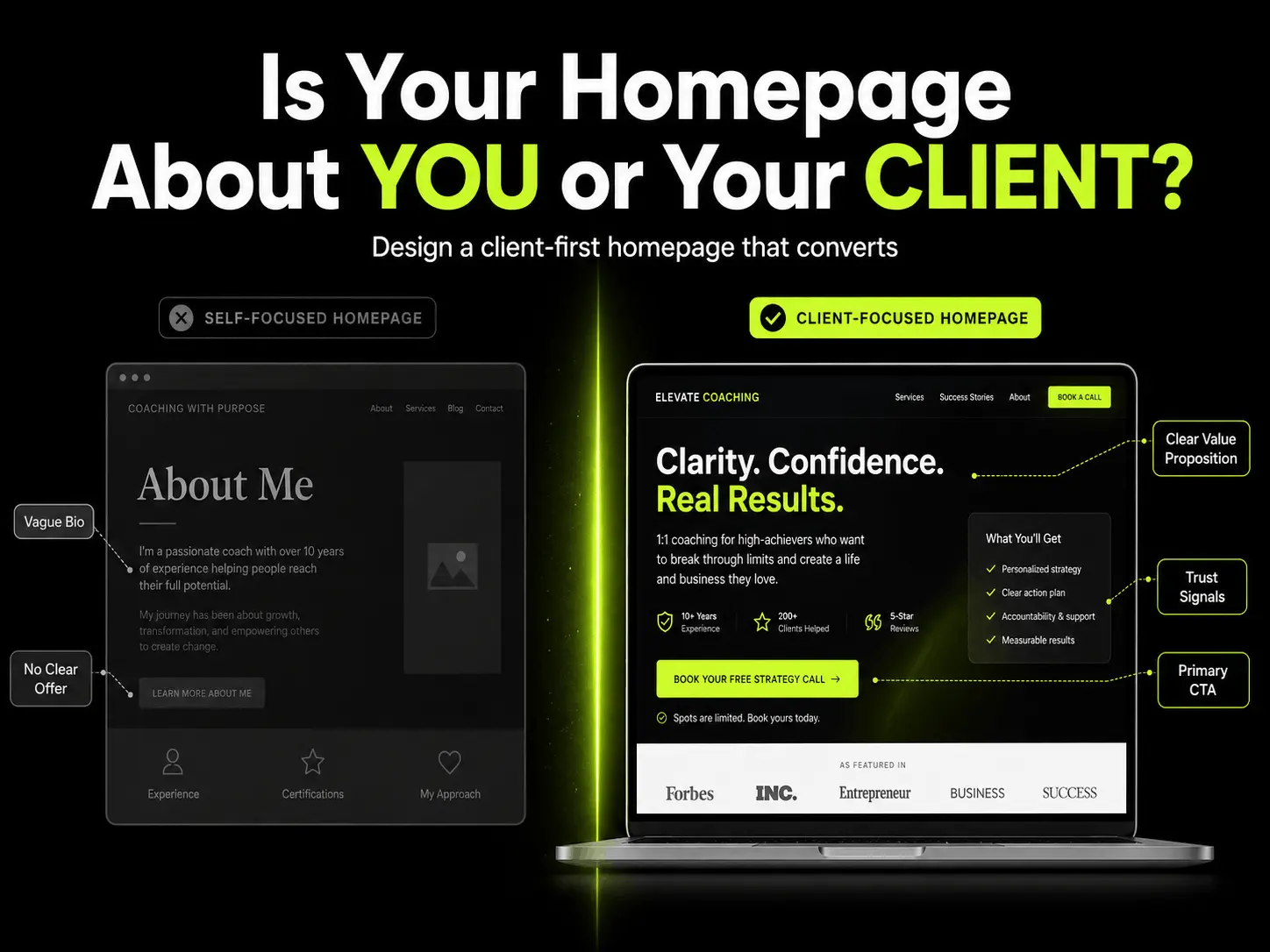
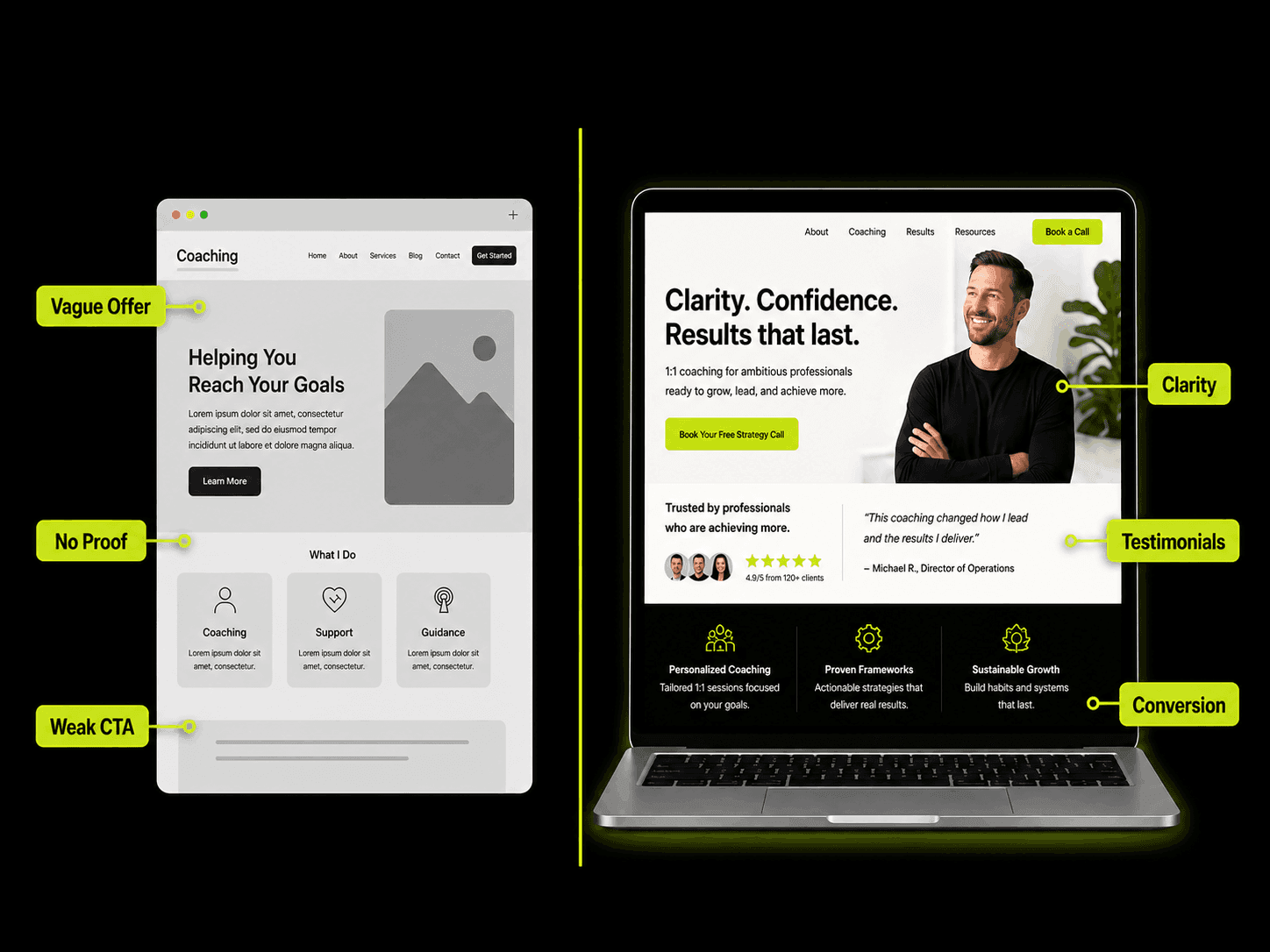
Your Website Needs This Above the Fold
The top section of your website should not start with a long story.
It should quickly answer:
- Who is this for?
- What problem is this solving?
- What result can I expect?
- What should I do next?
Your story still matters.
Your credentials still matter.
Your philosophy still matters.
But they work better after the visitor understands why they are in the right place.
If your homepage starts with you too soon, the visitor may not stay long enough to care.
That is why your one-line offer should appear early.
For more context, read this related guide on building a client-first coaching homepage.
A Simple Test for Your Offer
Read your current offer out loud.
Then ask yourself:
- Can a stranger understand it in five seconds?
- Does it name a specific audience?
- Does it point to a real problem or outcome?
- Does it sound different from generic coaching language?
- Would a past client recognise themselves in it?
- Could someone refer you using this sentence?
If the answer is no, the offer needs tightening.
Not because your coaching is weak.
Because the sentence is not doing enough work yet.
Do Not Make the Offer Too Clever
Some coaches try to sound unique by making the offer poetic.
That can backfire.
Clear beats clever.
Your offer is not the place to hide the point.
It is the place to make the point obvious.
You can bring personality into the rest of the page.
You can tell stories.
You can explain your method.
You can share your values.
But the first sentence should reduce confusion.
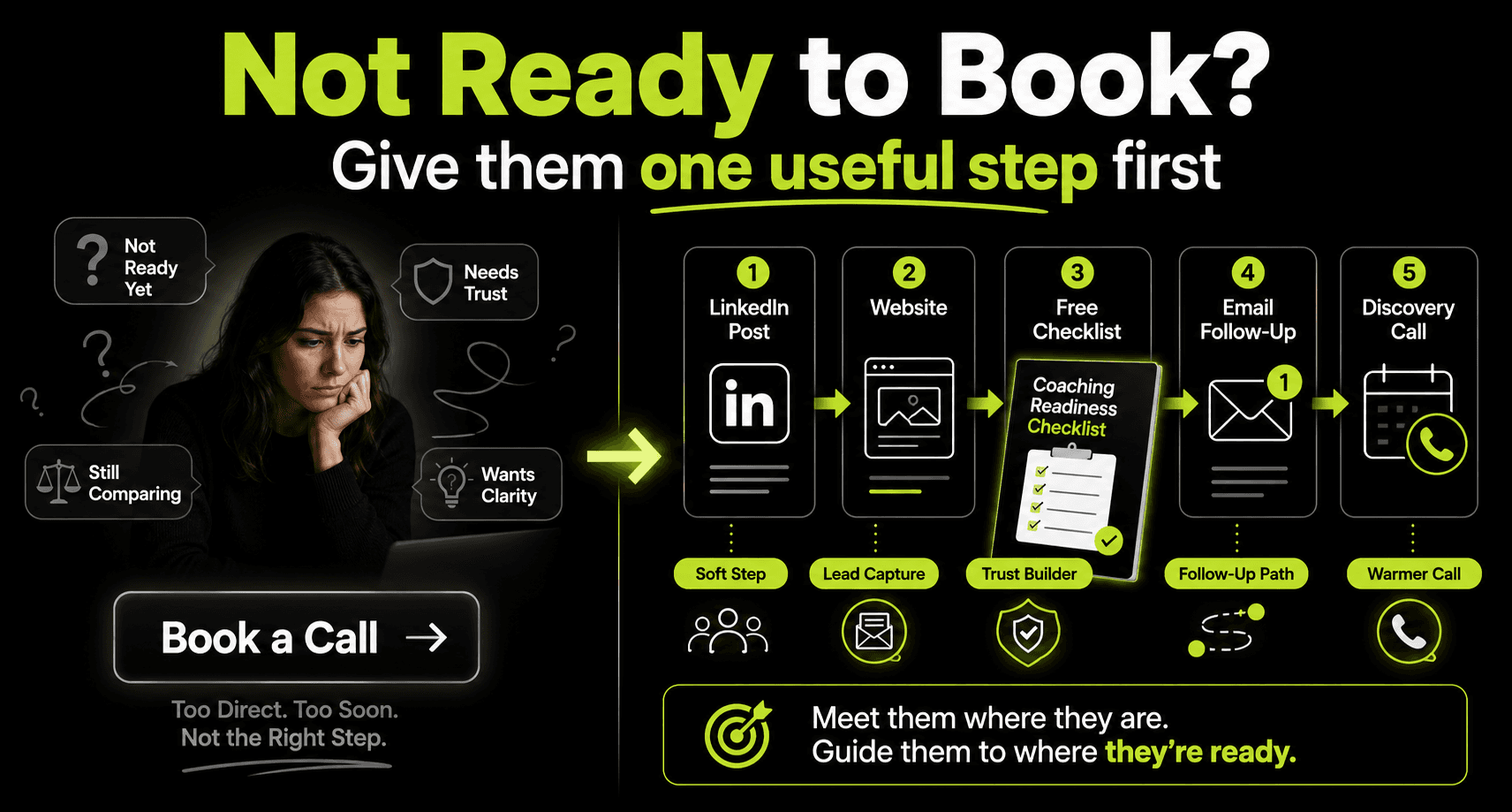
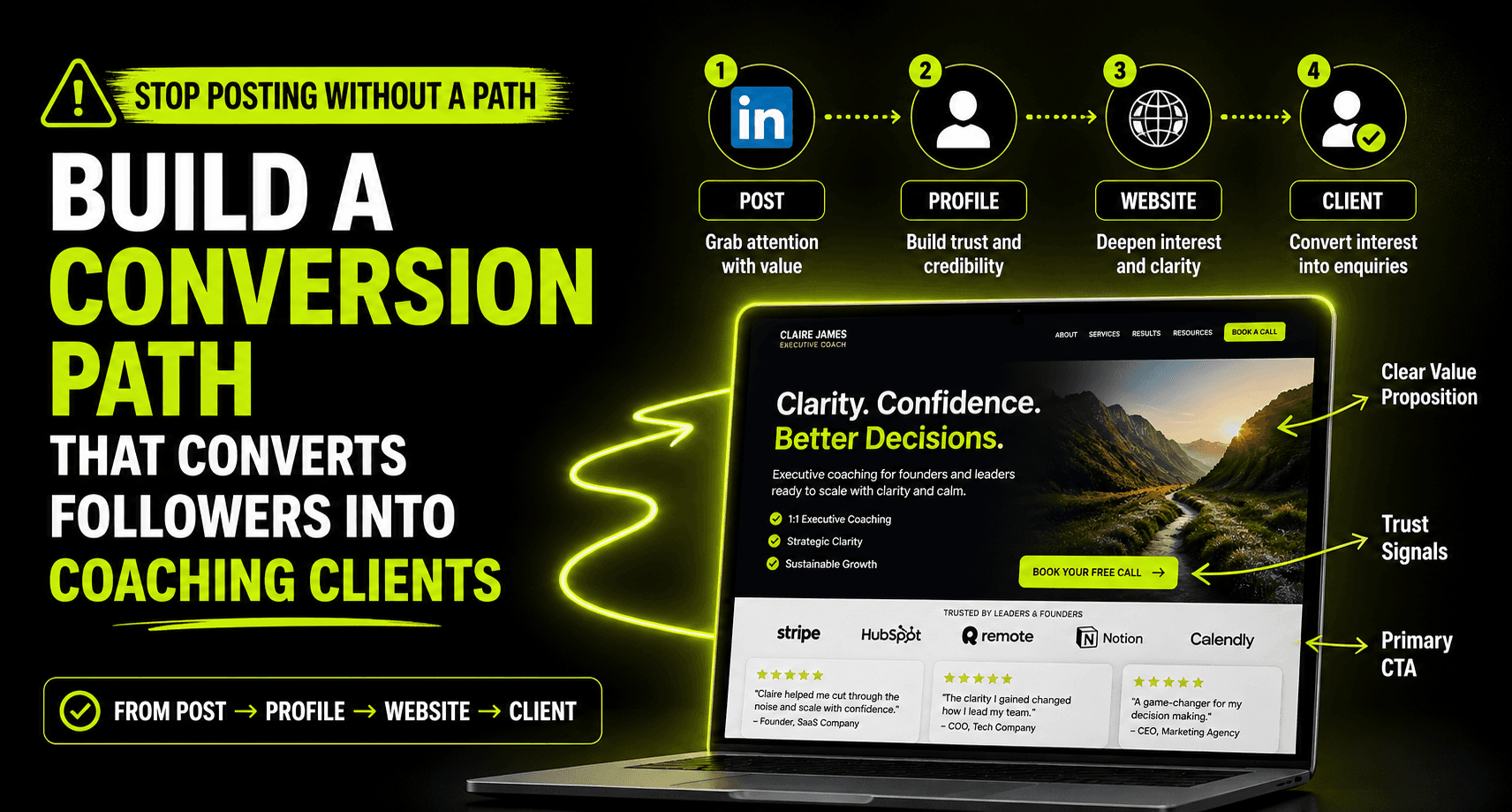
Connect the Offer to Your Conversion Path
A strong one-line offer also improves your conversion path.
It makes your LinkedIn content sharper.
It makes your profile clearer.
It makes your homepage easier to understand.
It makes your services page stronger.
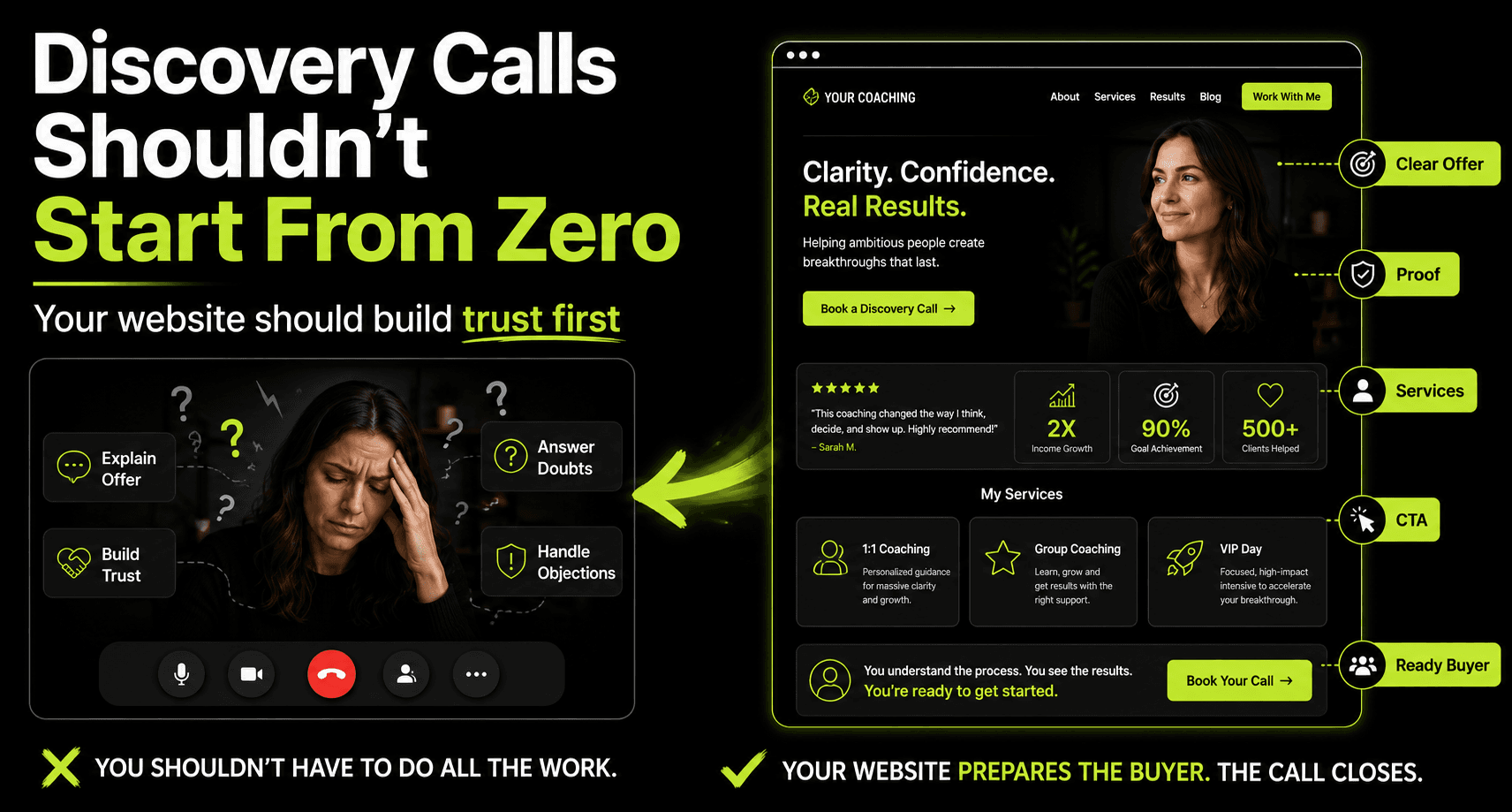
It makes your discovery calls better because people arrive with more context.
This matters if you are already posting but not getting enough enquiries.
Your content may be creating attention.
But your offer has to help turn that attention into action.
If you have not built that path yet, read this article on why posting without a path does not convert.
Final Thoughts
A one-line coaching offer will not fix everything.
But it will expose a lot.
If you cannot say what you do clearly, your website will struggle.
Your LinkedIn profile will feel vague.
Your services page will sound soft.
Your discovery calls will do too much explaining.
And your potential clients will keep guessing.
A clear offer does not make your coaching smaller.
It makes it easier to trust.
And in coaching, trust starts before the first call.
FAQ
What is a one-line coaching offer?
A one-line coaching offer is a clear sentence that explains who you help, what problem you solve, and what outcome your coaching supports.
Why do coaches need a clear offer?
Coaches need a clear offer because potential clients must quickly understand whether the coaching is relevant to their situation. If the offer is vague, people hesitate or leave.
Where should I use my coaching offer?
Use it on your homepage, LinkedIn profile, services page, discovery call page, email signature, and lead magnet landing pages.
What makes a coaching offer weak?
A coaching offer becomes weak when it uses broad language, does not name a specific audience, and does not explain a clear problem or result.
Should my coaching offer be short or detailed?
Your main offer should be short enough to understand quickly. You can explain the details later on your services page or discovery call page.