Lead Magnet for Coaches
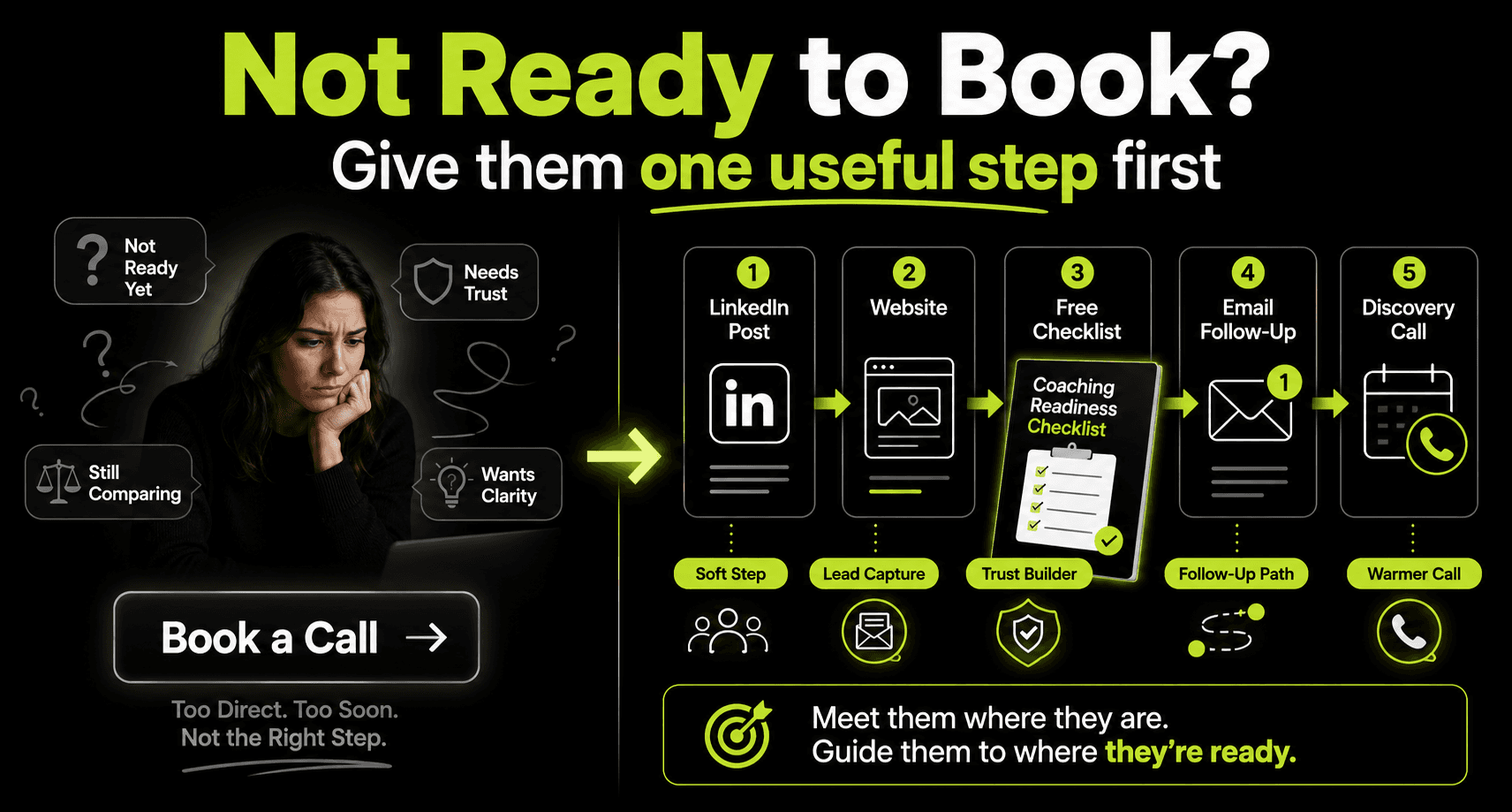
Not every visitor is ready to book a call.
That does not mean they are a bad lead.
It usually means they need more time.
More clarity.
More trust.
More proof that your coaching is relevant to their situation.
This is where many coaches lose people.
They create content.
Someone clicks their profile.
Maybe they visit the website.
They feel interested.
But they are not ready to book.
So they leave.
No email.
No follow-up.
No relationship.
No next step.
If your only CTA is “Book a Call,” you are only serving the people who are ready right now.
A lead magnet gives the not-ready visitor a softer step.
And for coaches, that matters.
Why Coaches Need a Lead Magnet
Coaching is not usually an impulse buy.
People think about it.
They compare options.
They wonder if they really need help.
They worry about cost.
They worry about trust.
They wonder if the coach will understand them.
That hesitation is normal.
So your website should not treat every visitor like they are ready to talk today.
Some are.
Many are not.
A lead magnet helps you keep the relationship alive with people who are interested but not ready yet.
It gives them a simple way to stay close to your thinking.
It also gives you a way to follow up with value instead of chasing them.
A good lead magnet does not pressure people. It helps them take one useful step.
The Problem With Too Many CTAs
Many coaching websites are not missing CTAs.
They have too many.
Book a call.
Join the newsletter.
Follow on Instagram.
Download the guide.
Watch the video.
Read the blog.
Apply now.
Contact me.
That may seem helpful.
But too many options can create confusion.
The visitor does not know which step matters most.
So they delay.
Or they leave.
A confused visitor rarely becomes a clear lead.
Your lead magnet should not add more noise.
It should simplify the path.
One clear problem.
One useful resource.
One next step after that.
What Makes a Good Lead Magnet for Coaches?
A good lead magnet is not just a free PDF.
It should solve a small, specific problem your ideal client already recognises.
It should feel useful quickly.
It should connect naturally to your coaching offer.
And it should help the visitor understand your way of thinking.
That last part matters.
Because people are not only downloading information.
They are quietly asking:
“Does this coach understand the problem the way I experience it?”
Your lead magnet should help answer that.
It should make the reader feel seen.
Not overwhelmed.
Not sold to.
Seen.
Lead Magnet Ideas for Coaches
You do not need a complicated funnel to start.
You need one useful asset.
Here are some lead magnet ideas that work well for coaches:
- A self-assessment
- A coaching readiness checklist
- A 5-question clarity audit
- A short decision-making guide
- A weekly reset template
- A burnout warning signs checklist
- A leadership reflection worksheet
- A “before you book a coach” guide
- A private email series
- A short video training
The best one depends on your audience.
A leadership coach may use a decision-making audit.
A health coach may use a routine reset checklist.
A business coach may use an offer clarity worksheet.
A life coach may use a values and direction self-assessment.
The format matters less than the usefulness.
The best lead magnet is not the biggest one. It is the one your ideal client actually wants to finish.
Keep the Lead Magnet Small
This is where many coaches overbuild.
They try to create a 40-page guide.
Or a full course.
Or a huge workbook.
Or a resource that explains everything they know.
That is usually too much.
Your lead magnet should not feel like homework.
It should feel like relief.
A short checklist can work better than a long guide.
A 5-question assessment can work better than a full workbook.
A one-page audit can work better than a long training.
Because the goal is not to teach everything.
The goal is to create movement.
Small useful steps build more trust than big unfinished downloads.
Connect the Lead Magnet to Your Main Offer
Your lead magnet should not be random.
It should lead naturally toward your coaching offer.
If you help founders with decision confidence, your lead magnet could be a decision audit.
If you help professionals rebuild energy, your lead magnet could be a weekly energy reset.
If you help leaders reduce burnout, your lead magnet could be a burnout pattern checklist.
If you help coaches clarify their offer, your lead magnet could be a one-line offer worksheet.
The connection should feel obvious.
The visitor should think:
“If this free resource is useful, the coaching may be even more useful.”
That is the bridge.
The lead magnet gives them a taste of your thinking.
Your coaching gives them deeper support, structure, and accountability.
Put the Lead Magnet in the Right Places
A lead magnet only works if people can find it.
Do not hide it in one footer link.
Place it where visitors are already making decisions.
Good places include:
- Your homepage
- Your blog posts
- Your services page
- Your LinkedIn featured section
- Your LinkedIn About section
- Your email signature
- Your booking page
For example, if someone reads an article about your coaching approach, offer a related checklist at the end.
If someone visits your services page but is not ready to book, offer a softer step.
If someone comes from LinkedIn, give them a simple path from content to resource to follow-up.
This connects directly with your broader content journey.
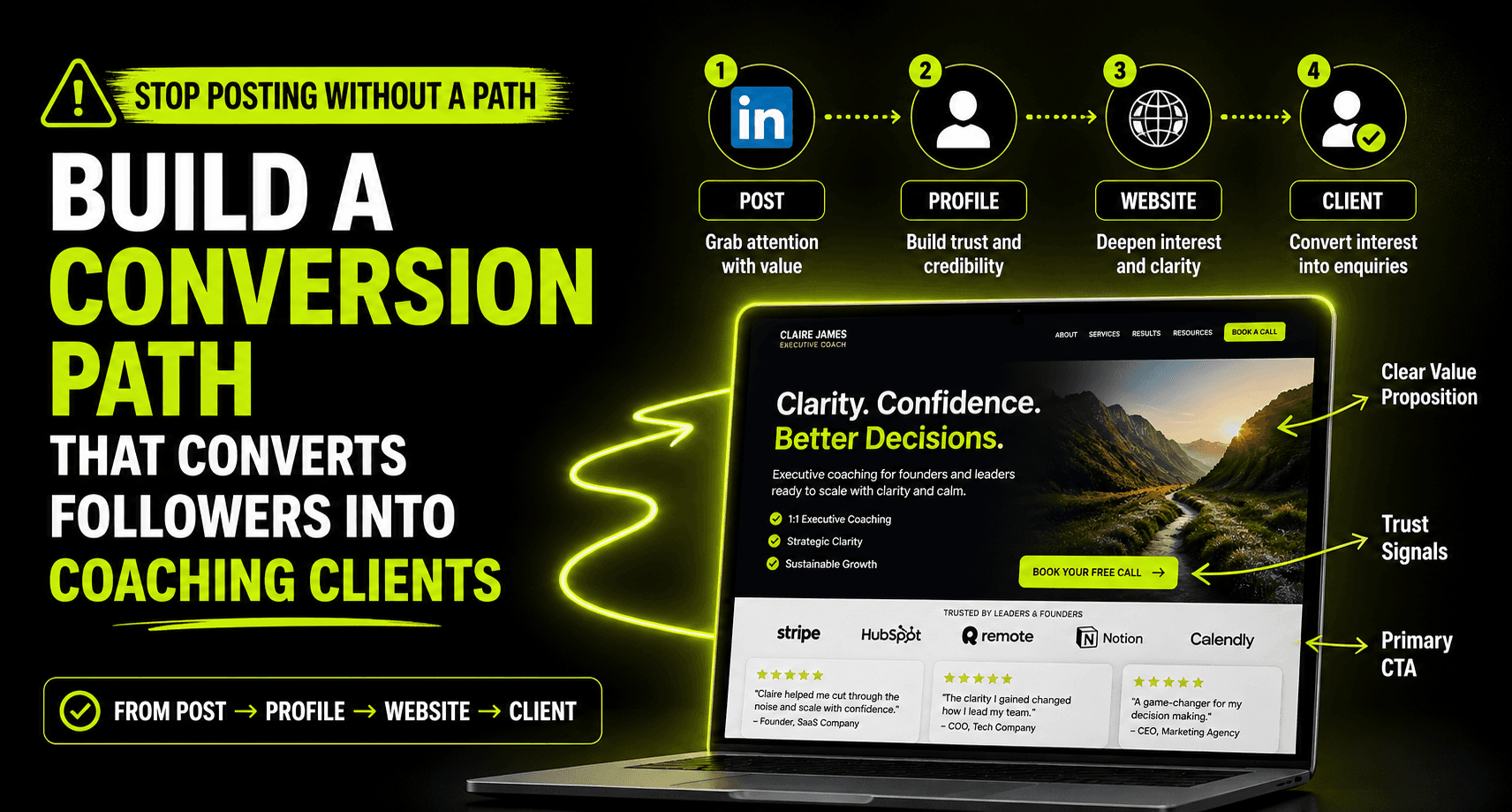
If your LinkedIn content is getting attention but not enough enquiries, read this article on posting without a path.
Build One Clear Follow-Up Path
The download is not the end.
It is the beginning of the relationship.
Once someone downloads your resource, they should not disappear into silence.
Send a simple follow-up sequence.
It does not need to be complicated.
It could look like this:
-
Email 1:
Deliver the resource and explain how to use it. -
Email 2:
Share one common mistake related to the topic. -
Email 3:
Tell a short client-style story or example. -
Email 4:
Explain how your coaching helps with the deeper version of the problem. -
Email 5:
Invite them to book a call or take the next step.
The point is not to spam.
The point is to stay helpful.
Trust builds through repeated useful contact.
If someone gave you their email, do not make the next message feel like a pitch. Make it feel like help.
Do Not Create Five Lead Magnets at Once
Many coaches overcomplicate the system.
They create too many resources.
One for burnout.
One for leadership.
One for confidence.
One for habits.
One for goals.
Then none of them get promoted properly.
Start with one.
One problem.
One audience.
One resource.
One follow-up path.
Once that works, you can expand.
But do not build complexity before clarity.
One clear path beats five half-used funnels.
How This Helps Discovery Calls
A strong lead magnet also improves your discovery calls.
People arrive warmer.
They have already learned something from you.
They have already seen how you think.
They have already taken one small step.
That changes the conversation.
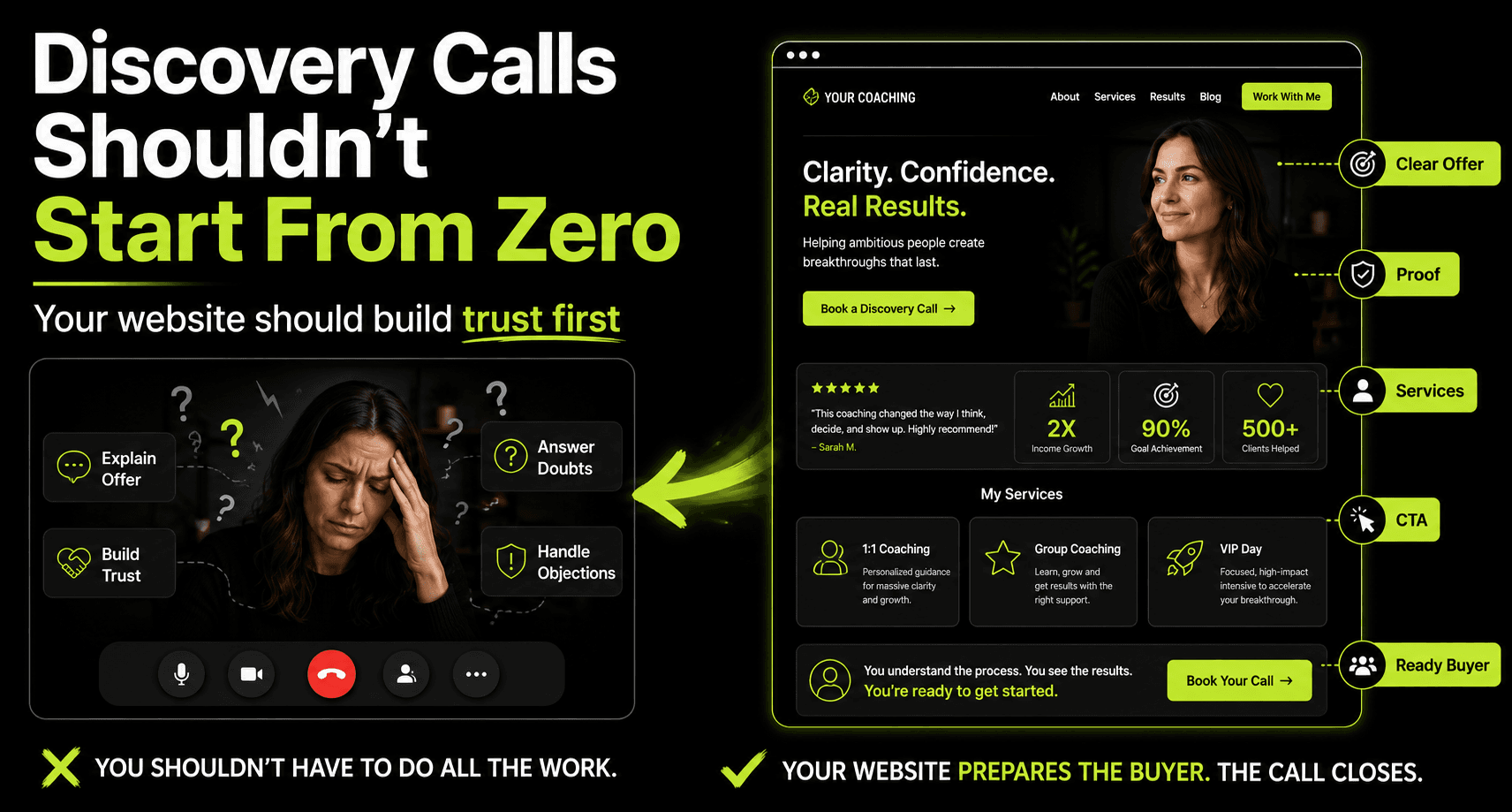
The call does not have to start from zero.
The buyer has context.
You have a clearer reason to follow up.
And the relationship feels less cold.
This is why your website should not force every interested visitor directly into a call.
Some need a bridge first.
If you want to understand this more deeply, read how coaching discovery calls convert better.
A Simple Lead Magnet Path for Coaches
Here is a simple path you can build:
-
Write one clear content theme.
Focus on a problem your ideal client already feels. -
Create one useful resource.
Make it small, practical, and directly connected to your offer. -
Place it on your website.
Add it to the homepage, blog posts, and services page where it makes sense. -
Promote it on LinkedIn.
Use posts that naturally lead into the resource. -
Follow up with value.
Send a short email sequence that builds trust and leads toward a call.
This is not fancy.
But it works because it respects how people actually decide.
They do not always jump from attention to purchase.
Sometimes they need a smaller step first.
Quick Audit Before You Build One
Before creating your lead magnet, ask yourself:
- What problem does my ideal client already know they have?
- What small win can I help them create quickly?
- Does this resource connect to my paid coaching offer?
- Will someone actually finish it?
- Where will I place it on my website?
- How will I promote it from LinkedIn?
- What will I send after they download it?
If you cannot answer these questions, pause before designing anything.
The strategy matters more than the PDF.
A lead magnet is not a file. It is a doorway into a relationship.
Conclusion
A lead magnet for coaches does not need to be complicated.
It does not need to be huge.
It does not need to look like a full online course.
It needs to be useful.
Specific.
Easy to finish.
Connected to the problem you solve.
And placed inside a clear path.
Because many good clients are not ready the first time they find you.
That does not mean you should lose them.
Give them one useful step.
Follow up with care.
Let trust build.
The goal is not to collect emails. The goal is to help the right person move closer to trust.
For more coaching website and content strategy resources, explore the Coaching Business Growth category or visit the 100XLift blog.