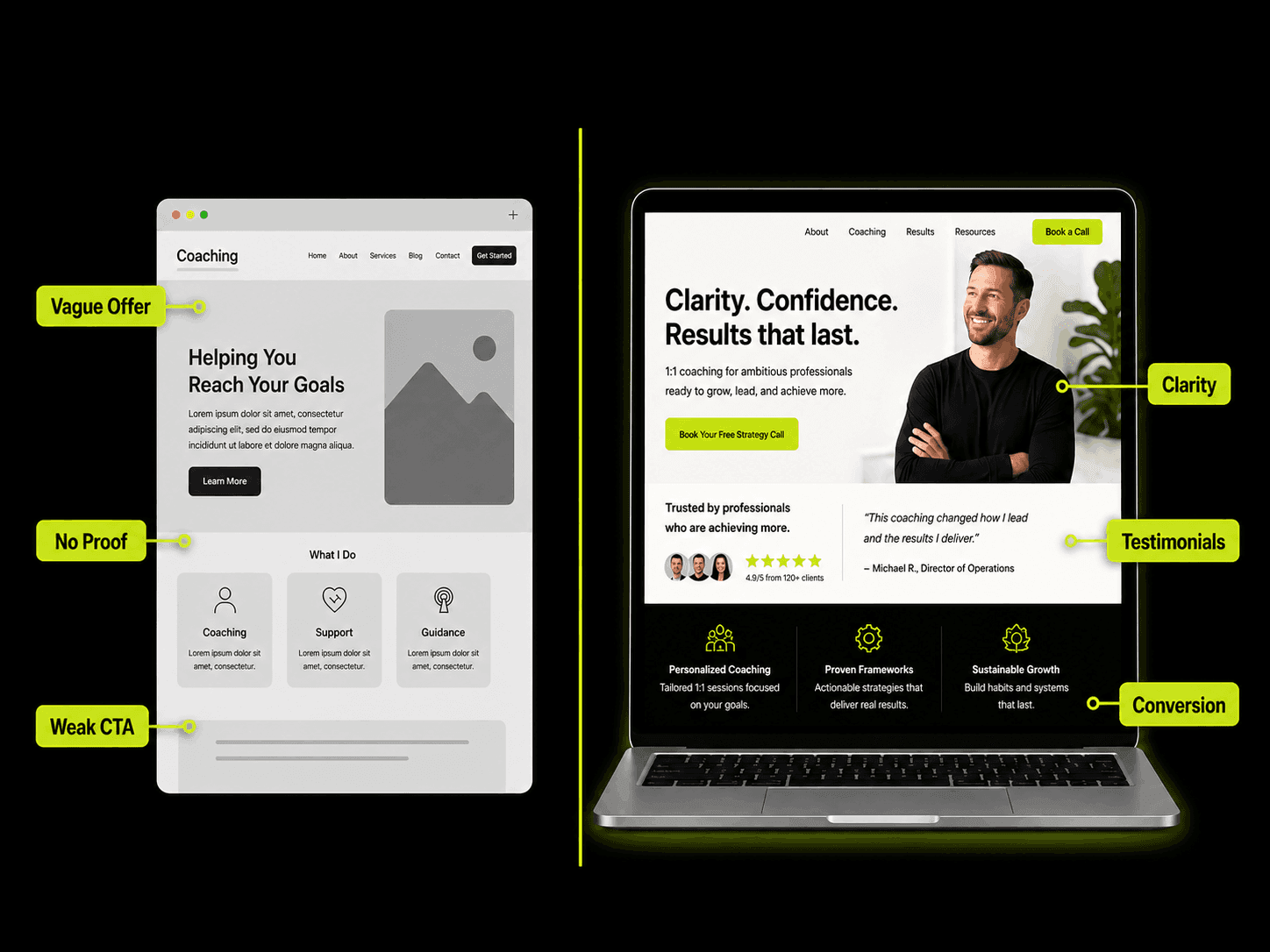
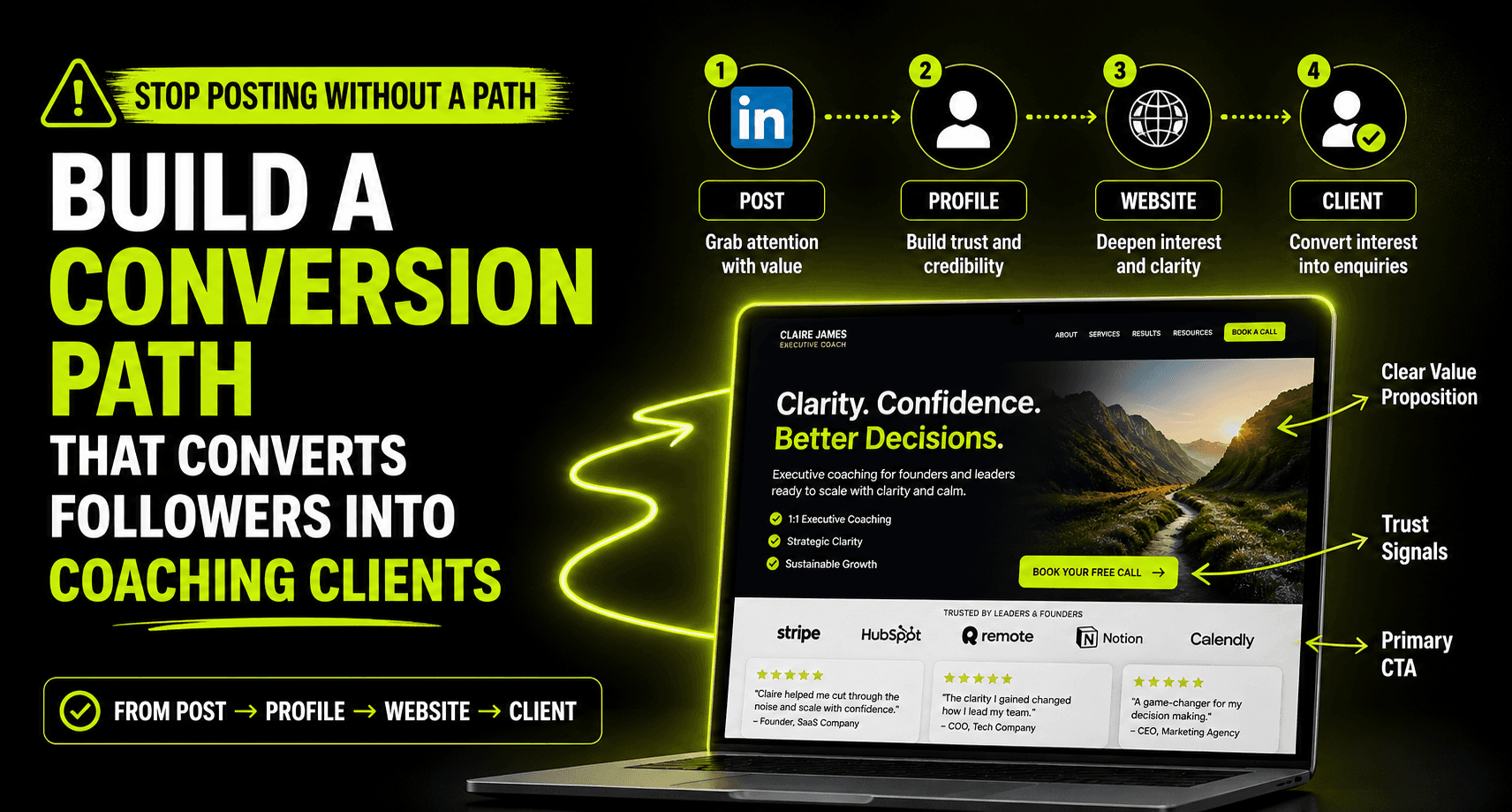
Services Page for Coaches
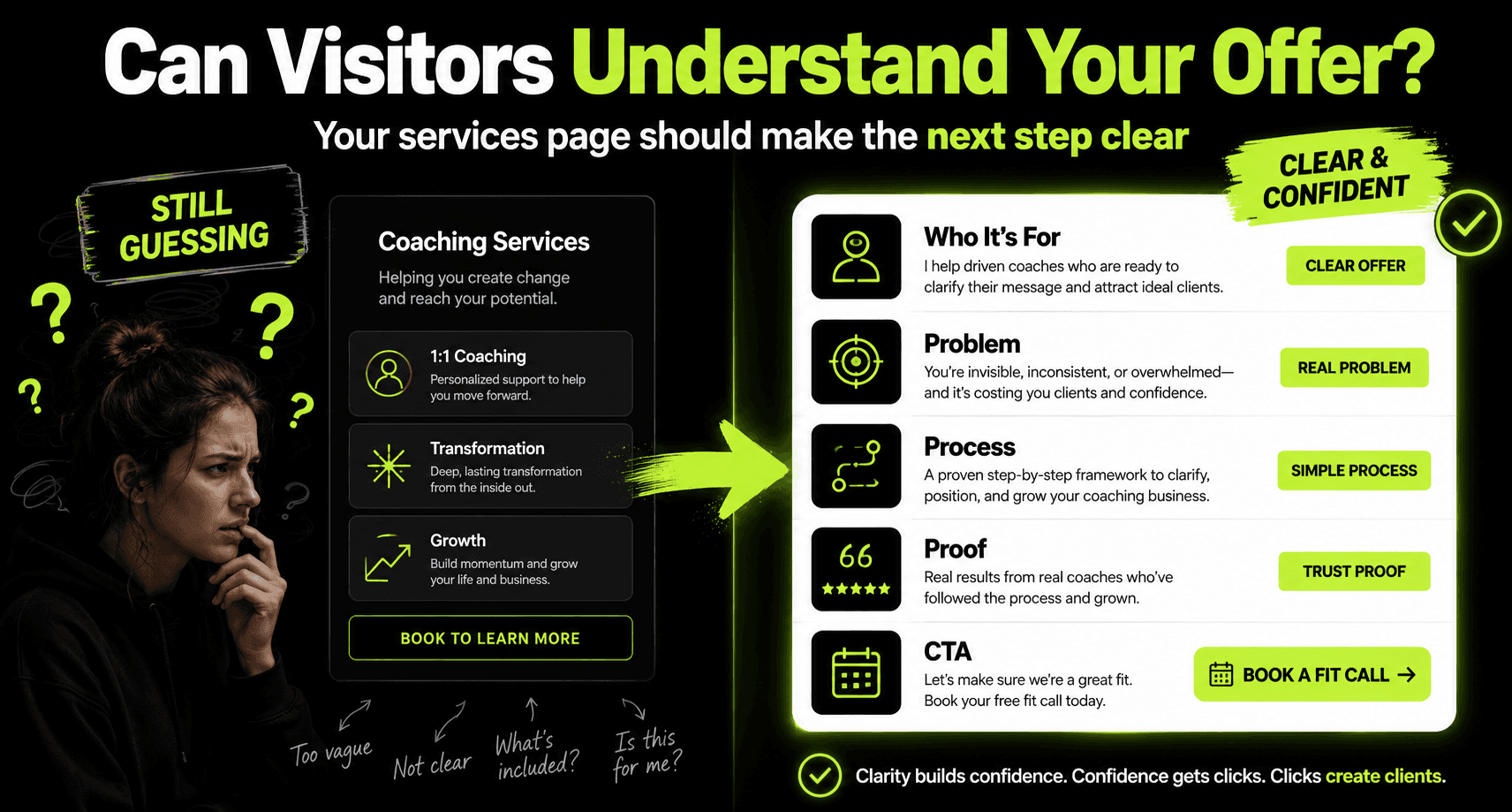
Your services page should not make people guess.
That sounds obvious.
But many coaching websites still do it.
The visitor lands on the page.
They are interested.
They want to understand what you offer.
They want to know if your coaching is right for them.
But the page stays vague.
It says things like:
“1:1 coaching available.”
“Book a call to learn more.”
“Transform your life and unlock your potential.”
That may sound positive.
But it does not answer the buyer’s real questions.
And when people do not get answers, they hesitate.
Or they leave.
A clear services page should help the right person feel, “Yes, this is for me.”
Why Your Services Page Matters
Your homepage creates the first layer of clarity.
Your services page goes deeper.
This is where a visitor starts asking more serious questions.
What exactly do you offer?
Who is it for?
What kind of problems do you help with?
How does the process work?
What happens after I enquire?
Is this structured?
Is it flexible?
Is it worth a conversation?
If your services page does not answer those questions, your discovery call has to do too much work.
That creates pressure.
For you.
And for the buyer.
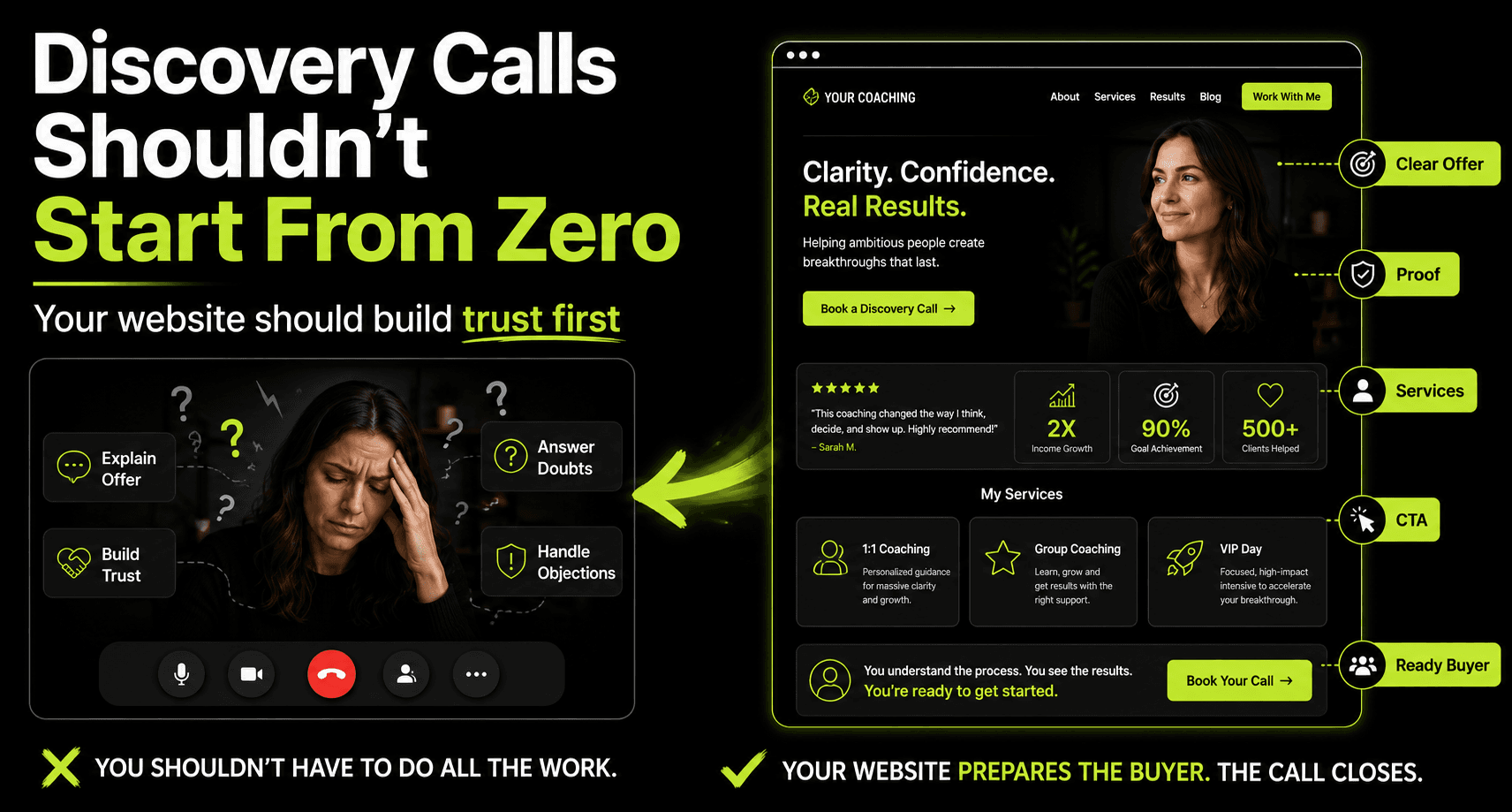
A strong services page prepares people before they speak to you.
It reduces confusion.
It filters poor-fit leads.
It makes better-fit people feel safer booking a call.
If your discovery calls currently feel heavy, this related guide on how coaching discovery calls convert better explains why the pre-call journey matters.
The Problem With Vague Services Pages
A vague services page usually sounds warm.
But it does not say enough.
It talks about growth.
Transformation.
Purpose.
Empowerment.
Breakthroughs.
These words are not bad.
But if they are not tied to a specific person, problem, or outcome, they become easy to ignore.
Your visitor is not trying to admire your language.
They are trying to decide if you can help them.
People do not buy vague transformation. They buy the belief that you understand their specific problem.
So instead of only saying:
“I help you become your best self.”
Say what that actually means.
For who?
In what situation?
With what kind of outcome?
Through what kind of process?
That is where clarity starts.
Start With Who the Service Is For
Before you explain the coaching, name the person it is built for.
This helps the visitor place themselves.
For example:
- For founders who feel stretched across too many decisions
- For professionals who want more structure, energy, and personal discipline
- For leaders who are tired of carrying everything alone
- For coaches who need a clearer offer and client path
- For high-achievers who look successful but feel disconnected
This kind of language does something important.
It makes the right person pause.
They see themselves in it.
They do not have to translate your offer in their head.
That matters because confused visitors rarely become serious enquiries.
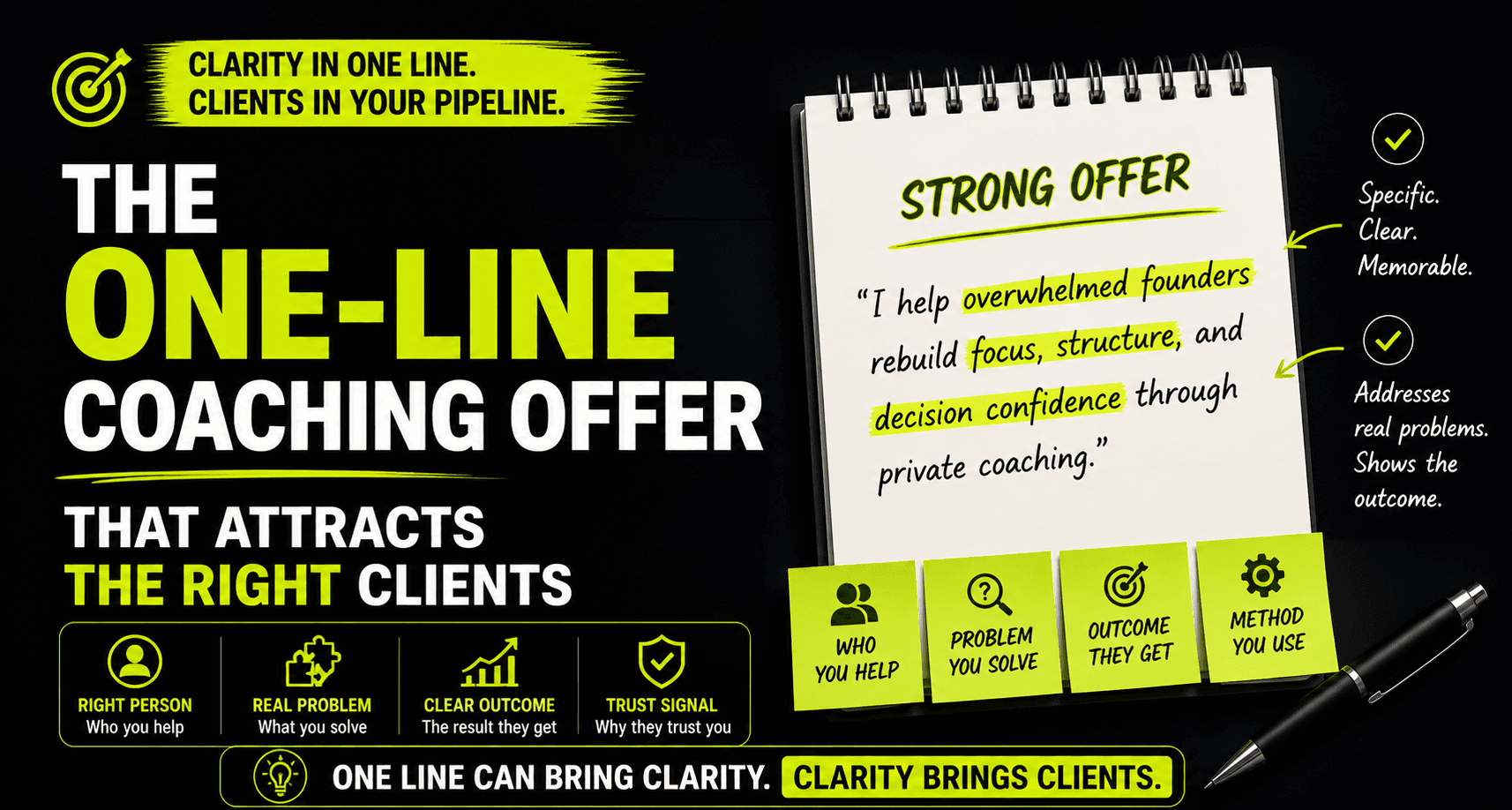
If you need help clarifying this first sentence, read this article on writing a one-line coaching offer.
Explain the Problem Clearly
Your services page should name the problem your coaching helps with.
Not in a dramatic way.
In a real way.
Your ideal client may be thinking:
“I know I need to change something, but I cannot get traction.”
“I keep making decisions from stress.”
“I am doing a lot, but I do not feel in control.”
“I have outgrown the way I used to operate.”
Use language close to what they already feel.
Do not over-polish it.
Do not hide it behind coaching jargon.
Say it plainly.
When the visitor sees their real problem on the page, trust starts earlier.
The buyer should feel understood before they feel sold to.
Describe the Outcome
After naming the problem, show where the coaching is meant to take them.
Not a fantasy outcome.
A believable one.
For example:
- Clearer weekly structure
- Better decision confidence
- Stronger personal boundaries
- More consistent routines
- Less reactive leadership
- A clearer offer and client path
- More confidence before a major transition
Outcomes make your offer easier to understand.
They also help people decide if the coaching is worth exploring.
If your service page only lists sessions, the visitor has to imagine the value.
Do not make them do that work.
Show the result your coaching is designed to support.
Explain What Happens in the Coaching Process
This is where many services pages are too thin.
They say:
“We will work together through personalised coaching sessions.”
Fine.
But what does that mean?
What happens inside the process?
Do you start with an audit?
Do you create a plan?
Do you use exercises?
Do you give homework?
Do you track progress?
Do clients get support between sessions?
You do not need to reveal every detail.
But give enough structure so the visitor feels grounded.
A simple process section could look like this:
-
Clarity:
We identify what is not working and what needs to change. -
Structure:
We build a simple plan around your real life, not an ideal version of it. -
Action:
You apply the work between sessions and bring the real results back. -
Adjustment:
We refine the plan based on what is actually happening.
This kind of section removes uncertainty.
It makes the service feel more real.
People trust what they can understand.
Make the Format Clear
Your visitor should know what they are considering.
Is it private coaching?
A group programme?
A workshop?
A short intensive?
A monthly retainer?
A fixed programme?
Say it clearly.
For each offer, include simple details like:
- Format
- Length
- Session rhythm
- Support included
- Who it is best for
- What happens after applying or booking
You do not always need to show pricing.
But you do need to show the shape of the offer.
If someone cannot understand the structure, they may not feel ready to enquire.
Add Proof Near the Offer
Do not hide proof on a separate testimonials page only.
Put proof close to the offer.
When someone is reading your services page, they are already considering whether to trust you.
That is the right moment to show evidence.
Use proof like:
- Specific testimonials
- Short client stories
- Before-and-after examples
- Relevant credentials
- Client outcomes
- Podcast or publication features
But keep it specific.
A testimonial like this is nice:
“Working with her was amazing.”
But this is stronger:
“Before coaching, I was constantly overthinking decisions. After six weeks, I had a clearer decision process and felt calmer leading my team.”
That gives the visitor something concrete.
It shows the change.
It helps them imagine themselves in the work.
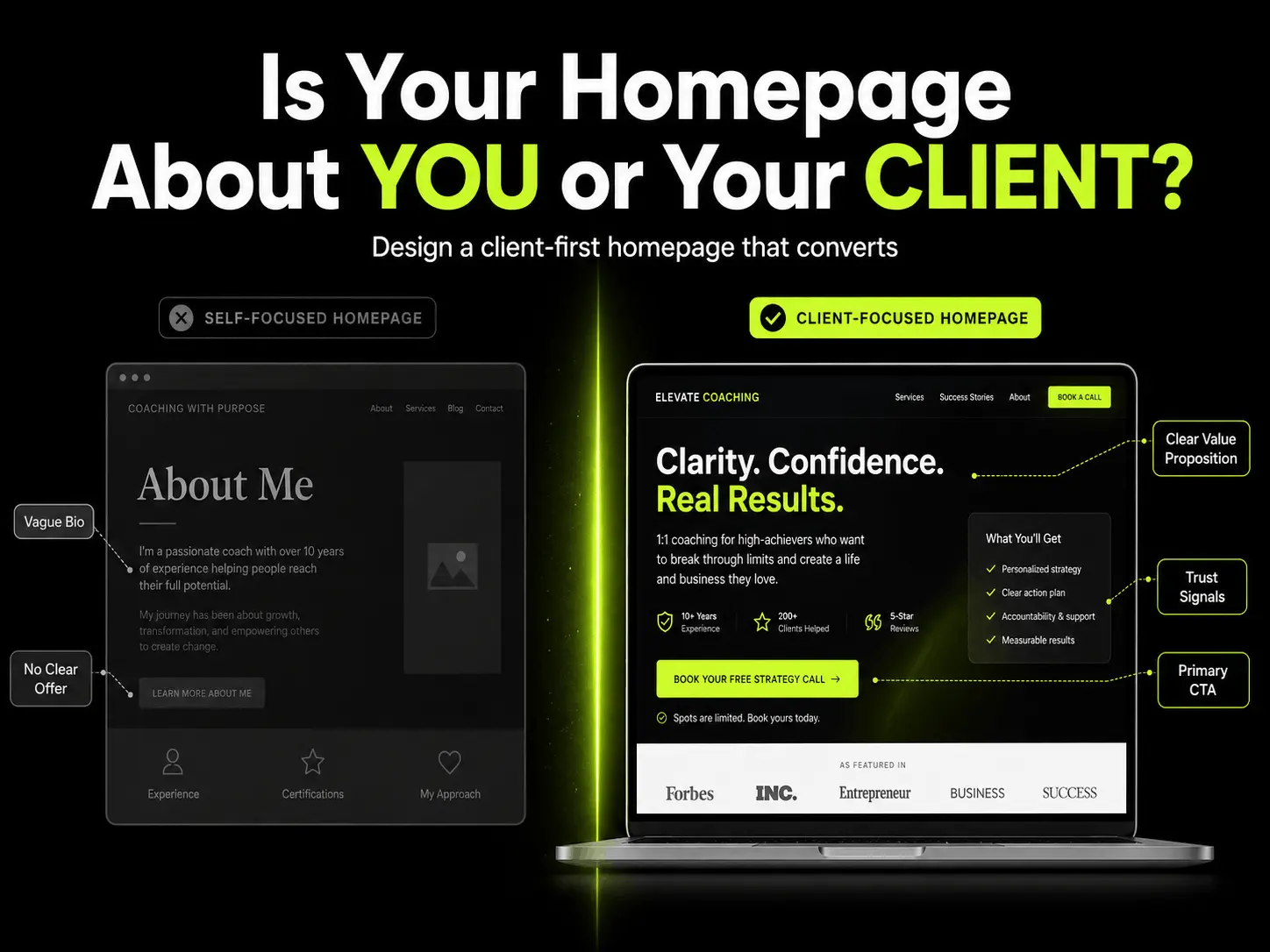
For a deeper breakdown, read this guide on how a coaching website attracts clients.
Make the CTA Specific
Your services page should not end weakly.
A vague CTA creates hesitation.
Instead of:
“Get started.”
Use something clearer:
- Book a discovery call
- Apply for private coaching
- Schedule a fit call
- Request a coaching consultation
- Take the coaching readiness check
The CTA should match the offer.
If the service is high-touch, an application might make sense.
If the service is more accessible, a discovery call may be better.
If the person is not ready, offer a softer step.
For example, a checklist, guide, or self-assessment.
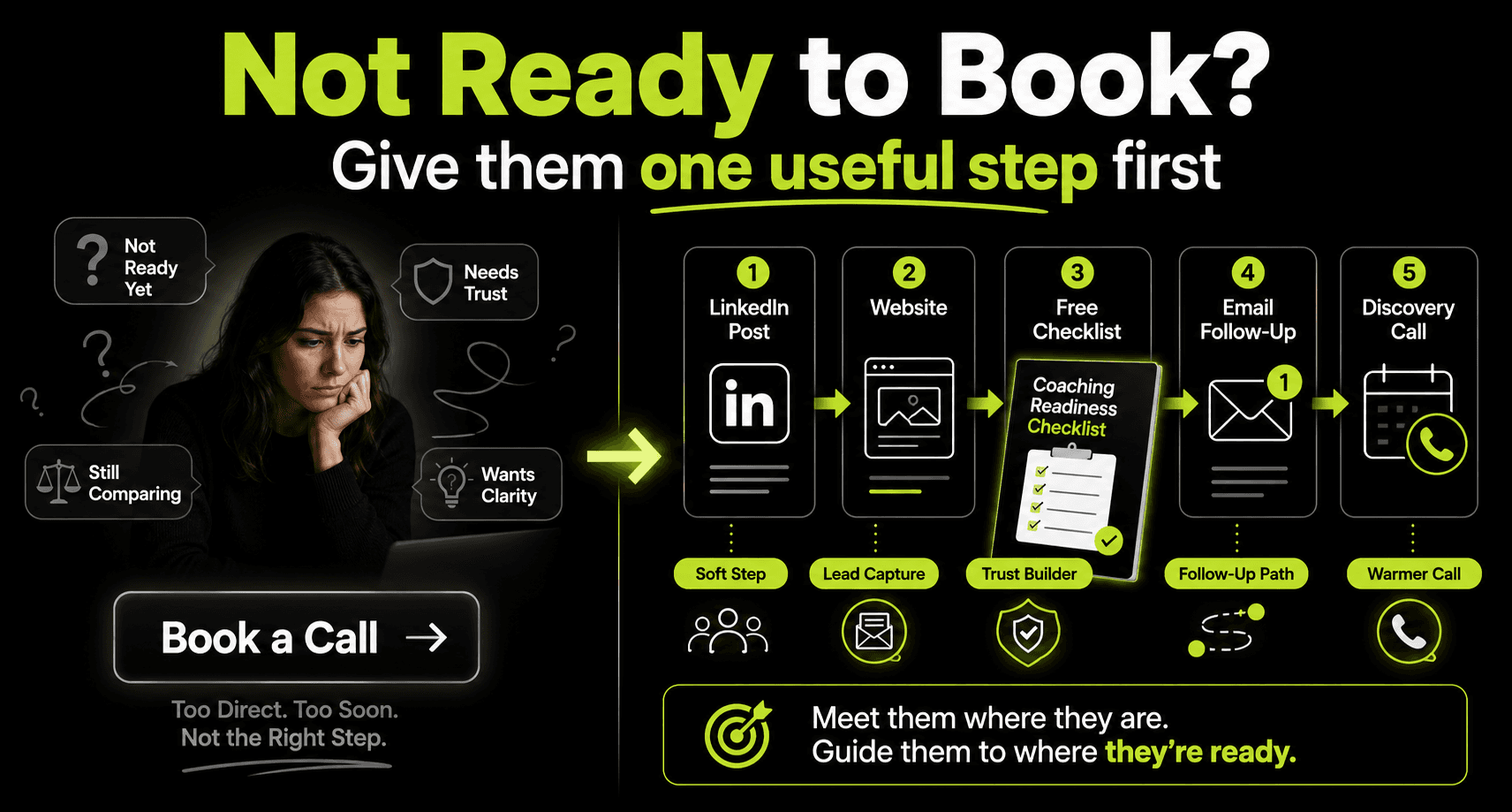
This is where a lead magnet can help.
If your only CTA is “Book a Call,” read this guide on lead magnets for coaches.
The CTA should make the next step feel obvious, not risky.
Do Not Make the Page Too Clever
Simple beats clever here.
Your services page is not the place to be mysterious.
It is not the place to hide the offer behind poetic language.
It is not the place to make visitors decode your method.
Clarity wins.
Use plain headings.
Use short sections.
Use examples.
Use real client language.
Use proof.
Use one clear CTA.
You can still have personality.
You can still sound premium.
You can still feel different.
But do not sacrifice understanding for style.
If the visitor has to reread your services page to understand the offer, the page is working too hard in the wrong direction.
A Simple Services Page Structure for Coaches
Here is a clean structure you can use.
-
Headline:
Say who the service is for and what outcome it supports. -
Problem section:
Name the situation your ideal client recognises. -
Offer section:
Explain what the coaching includes. -
Process section:
Show how the work happens. -
Proof section:
Add testimonials, outcomes, or credibility markers. -
Fit section:
Explain who this is best for and who it may not be for. -
CTA section:
Give one clear next step. -
FAQ section:
Answer the doubts people usually have before enquiring.
This structure is not fancy.
But it works because it follows how buyers think.
They do not just want information.
They want confidence.
Questions Your Services Page Should Answer
Before publishing your services page, check if it answers these:
- Who is this coaching for?
- What problem does it help with?
- What outcome can someone reasonably expect?
- What happens during the coaching?
- How long does the process take?
- What kind of support is included?
- What proof shows this works?
- Who is not a good fit?
- What is the next step?
- What happens after they enquire?
If those answers are missing, people may still book.
But they will arrive with more uncertainty.
That means the discovery call has to do more work.
And that is exactly what your website should reduce.
Conclusion
A clear services page does not need to be complicated.
It needs to be useful.
It should help visitors understand what you offer.
Who it is for.
What problem it solves.
What outcome it supports.
How the process works.
Why they can trust you.
And what to do next.
That is the job.
Your services page should make the right visitor feel clearer, not more curious.
Curiosity is good for content.
Clarity is better for conversion.
For more coaching website and conversion resources, explore the Coaching Business Growth category or visit the 100XLift blog.